Interreg Sudoe CERES
The CERES project has developed actions to maintain and improve ecological continuity networks to enhance biodiversity and the ecological functions of the natural environment. This project involved institutions from France, Spain, and Portugal.
The project comprises four actions:
1. Development of a common tool for characterizing the quality and ecological connectivity of forest and riparian ecosystems in the SUDOE area.
2. Demonstrative pilot projects to improve the quality and connectivity of forest ecosystems (including riparian forests).
3. Towards the definition of joint strategies for concerted management of forest and riparian ecosystems in the SUDOE area.
4. Communication about the quality of forest and riparian ecosystems and their connectivity.
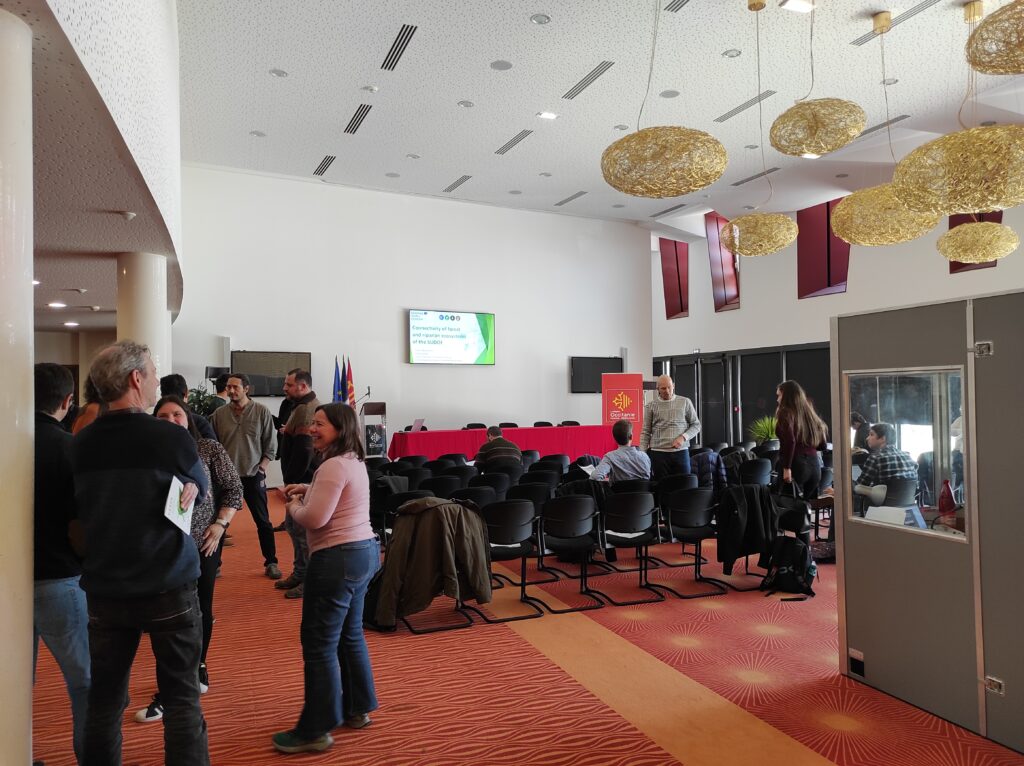
Dendron has contributed to the planning of habitat improvement actions and connectivity optimization in two study areas: (1) Parc Natural de les Capçaleres del Ter i del Freser (Ter River Basin in the Eastern Pyrenees) and (2) Parc Natural dels Ports (Southern Pre-Coastal Range).
The use of territorial planning algorithms allowed us to conceptualize a much more complex connectivity problem, extending beyond the target species: the capercaillie (Tetrao urogallus) and saproxylic insects, respectively. In the case of Capçaleres, we were able to define, optimize, and plan actions for habitat improvement for the black woodpecker (Dryocopus martius) and other species that utilize tree cavities, such as the Tengmalm’s owl (Aegolius funereus), the short-toed treecreeper (Certhia brachydactyla), and species of tree-dwelling bats. In the case of Ports, habitat improvements were also included for the Iberian ibex (Capra pyrenaica), plant species (Centaurea podospermifolia, Arenaria conimbriscensis subsp. viridis, Atropa baetica, and Pyrola chlorantha), the barbastelle bat (Barbastella barbastellus), and saproxylic fungi species, especially Gloeocystidiellum parvisporum, which fruits on dead wood of Pinus sylvestris.
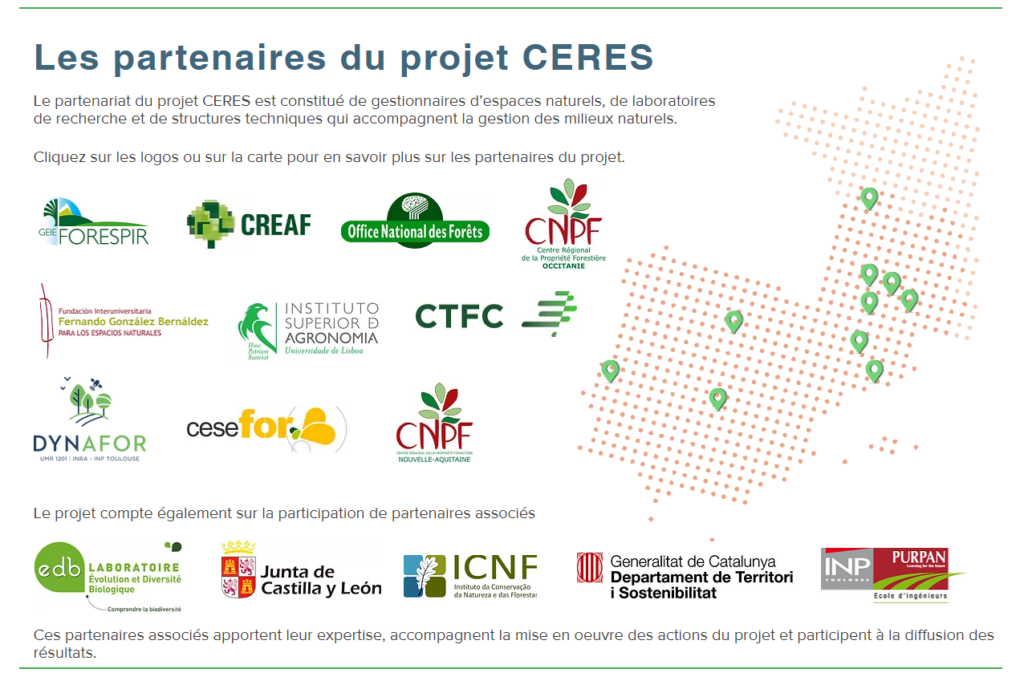
The report containing the results of CERES, including the planning methodology we have implemented, will be published in the coming months on the project’s website. Additionally, a manual for the management of forest ecosystems will also be published to promote connectivity in Mediterranean forest and riparian ecosystems.
We would like to express our gratitude to all the project partners for inviting us to participate in this conference, where we have been able to learn about the operations of French forest institutions such as the National Center for Private Forest Ownership (CNPF), which works towards implementing good practices in the management of private forest properties, and the National Forestry Office (ONF), which coordinates the management of French public forests. There is much for us to learn about how other countries develop and implement their forest policies.
Stay tuned to learn more about our work in the context of forest and riparian connectivity, as well as to see the manual that will be published as part of this excellent project.