
10 Forest Myths That Threaten the Planet’s Future
Imagine a spectacular, dreamlike forest full of majestic trees. Well, it’s likely to be this spectacular because someone has been there before with one or several chainsaws. We’ll tell you about various forest myths that you surely didn’t know.
In our collective imagination, we have a series of completely false ideas about forests. A series of hoaxes that should be dispelled as soon as possible to promote proper forest management.
The Conversation published an article discussing 10 myths about forests that hinder the planet’s future. Here we share all the details about these myths and how they affect the planet’s sustainability.
Myth 1: Humans Shouldn’t Touch Forests

The concept of an “original” forest, evoking an earthly paradise, does not exist. According to The Conversation , in Europe, barely 0.7% of forests remain in a primary state, that is, without human intervention. Meanwhile, in America, approximately 20% of forests retain this condition.
This means that human intervention in forests is present and has left a significant mark on forest ecosystems worldwide. With the advancement of civilization, forests have undergone processes of selective logging to obtain timber resources and to be converted into agricultural or urban lands.
It’s worth noting that the distinction between “natural” and “man-made” forests is not necessarily a clear dichotomy. Many forests managed by indigenous communities or practitioners of traditional silviculture for generations can show biodiversity and forest structure just as valuable as natural forests.
Myth 2: Cutting Trees is Bad for the Planet
This is one of the most common forest myths. Although the reality is that tree cutting can be an important tool when done responsibly and sustainably.
According to The Conversation, in many cases, trees need to be harvested for practical and ecological reasons. For example, in areas where forest fires are common, removing dead or dying trees can help prevent the spread of fires and protect surrounding communities.
Likewise, selective logging can open space for the growth of young and healthy trees, thus promoting natural forest regeneration.
It should be noted that wood and other forest products derived from controlled logging can have significant environmental benefits. Because wood is a renewable and biodegradable resource, it makes it a more sustainable alternative, especially when compared to non-renewable materials such as plastic or steel.
Tree cutting is not inherently good or bad, but rather depends on how it is carried out and what mitigation measures are implemented to minimize its negative impacts.
Myth 3: The Greener and More Trees, the More Natural
The increase in global forest cover in recent decades is the result of several factors, such as reforestation and the expansion of forest plantations in response to the demand for timber and other forest products.
But this trend can have unintended consequences, especially when proper forest management is not carried out.
One of the main problems associated with increased forest density is the risk of large-scale forest fires. The accumulation of plant biomass due to excess trees creates conditions conducive to the rapid and devastating spread of fires, which poses a threat to the safety of nearby communities and the health of forest ecosystems.
Increased forest density can have negative impacts on biodiversity and overall ecosystem health. Competition between trees for resources such as sunlight, water, and nutrients can lead to the suppression of less competitive species and the loss of biological diversity in the forest.
The loss of tropical forest is especially concerning due to the biodiversity and vital ecosystem services they provide. These types of forests provide climate regulation, soil conservation, and freshwater provision.
Myth 4: Forests are Dirty
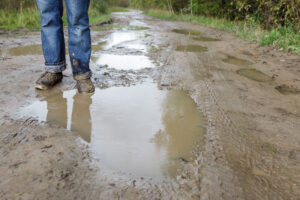
The perception that forests are “dirty” for having undergrowth or weeds can be erroneous if the function and importance of the vegetation that composes them is not fully understood.
Thickets, shrubs, and the layer of herbaceous vegetation are natural components of forest ecosystems and play crucial roles in maintaining biodiversity, soil retention, water cycle regulation, and protection against erosion.
It is essential to understand that the risk of forest fires is not solely due to the presence of dense and lush vegetation. In fact, in many cases, low vegetation can act as a natural buffer that helps prevent the rapid spread of fire by maintaining moisture in the soil and providing physical obstacles to its advance.
True forest pollution occurs when humans introduce waste and garbage into the forest environment. Abandoned waste can contaminate soil and water, threaten the health of animals living in the forest, and even cause forest fires if the waste is flammable or poorly managed.
Myth 5: Eucalyptus Trees Favor Fires
In recent years, there has been debate about the possible influence of eucalyptus expansion and its impact on forest fires. There has been debate about the fires in Chile and Portugal in 2017 where this plant was found. However, so far there is no scientific evidence to support the claim that eucalyptus trees increase the risk of forest fires.
The case of Portugal was debated since eucalyptus trees constitute approximately 26% of its total forest area. Recent studies reveal that large forest fires are less likely in eucalyptus plantations than in other areas.
Some techniques and strategies to minimize fire risks are regular cleaning of the understory, creation of firebreaks, and careful planning of reforestation. These measures reduce the amount of combustible material available and facilitate access and fire extinguishing operations if a fire occurs.
Myth 6: Fire Destroys Forests
There is a common perception that forest fires are an absolute threat to the forest. And, although it’s true, it should be noted that in most forest ecosystems in the world, fires are natural phenomena that act as a necessary tool for their regeneration. Much of the vegetation in America and Europe is adapted to fires.
Moreover, many types of vegetation, such as coniferous forests and Mediterranean scrublands, have evolved to thrive in environments where fires are frequent.
The seeds of some plant species, for example, only germinate after being exposed to the heat of fire. Additionally, fires eliminate dead vegetation and excess leaf litter, which reduces competition for nutrients and allows new plants to grow with greater vigor.
When used well and under strict control measures, fire can help maintain the balance of these natural environments, promoting biodiversity and strengthening forest resilience. In effect, by eliminating dead or diseased vegetation, fire facilitates the growth of new plants, allows light to enter the soil, and provides essential nutrients, resulting in more fertile soil and greater species diversity.
This technique, known as prescribed burning or controlled fire, is a practice managed by specialists who take into account climatic and ecological factors to avoid unwanted fire spread. By mimicking the effects of natural fires, the controlled use of fire helps reduce the risk of uncontrolled forest fires and regenerate species adapted to these events, which contributes to forest sustainability and mitigation of climate change effects on these ecosystems.
In Nordic countries like Finland, controlled fire has always been a highly valued forest management technique in their boreal forests. In these ecosystems, fire plays an important role in the decomposition of the understory and humus, which is particularly important for maintaining the flow of usable nutrients in the soil. Furthermore, these burns favor the habitat of various species, such as capercaillie and certain types of insects that thrive in burned areas.
Myth 7: Increasing the Area of Natural Reserves to Protect Species
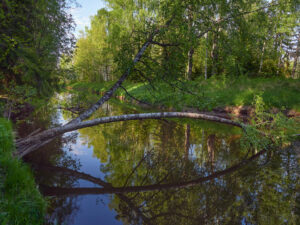
There is a widespread belief that increasing the number of natural reserves is the only effective way to protect vulnerable species. However, most of these protected species do not reside exclusively in national parks.
It is essential to adopt forest management practices that adapt to the needs of each species and ecosystem. This may include creating biological corridors, restoring degraded habitats, and implementing sustainable logging and reforestation practices. These actions can influence biodiversity conservation.
It should be noted that increasing protected areas in high-income countries can have unexpected consequences at a global level. As these countries restrict the exploitation of their own forest resources, the demand for imported timber from lower-income countries increases.
Intensive and unregulated exploitation of forests in developing countries can lead to biodiversity loss, soil degradation, and destruction of vital ecosystems. In this sense, forest protection in rich countries can, paradoxically, contribute to greater ecological damage in other parts of the world.
Myth 8: Reforestations are Artificial Forests
The perception that forest reforestations result in artificial forests or simple crops is erroneous. When a degraded forest receives restoration, the ecosystem does not become a crop. It remains a forest, with all its complexity and dynamism.
Current reforestation programs seek to restore tree cover, conserve and improve biodiversity. This is achieved by introducing local species and varieties, including trees, shrubs, and other companion plants. These practices help create more resilient and diverse ecosystems that can sustain a greater variety of wildlife.
Forest reforestations allow soil stabilization, improvement of air and water quality, and creation of habitats for a wide range of species. Additionally, restored forests can act as carbon sinks, contributing to climate change mitigation.
Myth 9: An Ecologist Always Protects the Forest
Ramón Margalef, considered the father of ecology in Spain, said that “environmentalism is to ecology what socialism is to sociology.” This statement speaks to the importance of using science to separate what is based on evidence and what comes from ideologies.
Well-intentioned ecological actions can be disastrous if not based on rigorous scientific analysis. For example, opposing sustainable tree cutting can increase fossil fuel consumption and increase the risk of forest fires.
We have the option of managing forests sustainably or leaving them to their fate. Without proper management, more severe damage to nature can occur, such as fires, droughts, and pests. These could be harmful to both nature and us.
Some recommended practices are controlled logging, reforestation with native species, and creation of firebreaks. These actions help maintain the health and biodiversity of forest ecosystems. Sustainable management of natural resources is not just a matter of ecological conservation, but also of ensuring a habitable future for humanity.
Myth 10: The Solution to Save the Planet is to Stop Using Paper
While it’s important to be aware of the environmental impact associated with its use, simply eliminating paper altogether is not a viable or realistic solution. The most effective approach is to ensure that the paper we use comes from responsible and sustainable sources. Forest certification is crucial, as it guarantees that the wood used to produce paper has been harvested legally and respectfully with the environment.
There are several internationally recognized forest certification systems, such as the Forest Stewardship Council (FSC) and the Programme for the Endorsement of Forest Certification (PEFC), which establish rigorous standards for sustainable forest management.
These standards include criteria related to biodiversity conservation, protection of workers’ and local communities’ rights, and reduction of adverse environmental impacts.By opting for certified paper products, consumers can actively contribute to forest conservation and promotion of responsible forestry practices.
Would you like to integrate ecological technology to manage natural resources? Discover all the forest services we offer at Dendron.